The Official Cannabis Independent strain guides
The Official Cannabis collection · sheet 26No 26 · PapayaUniverse

The Papaya universe

The Lagoon Mechanic

If Papaya is your strain, this is your sign: the Lagoon Mechanic. The end of the long dock at seven in the morning, the water so clear the float plane seems to hang above its own shadow, and you on one knee on the float with the pump, getting the night out of her before anyone trusts her with the day.

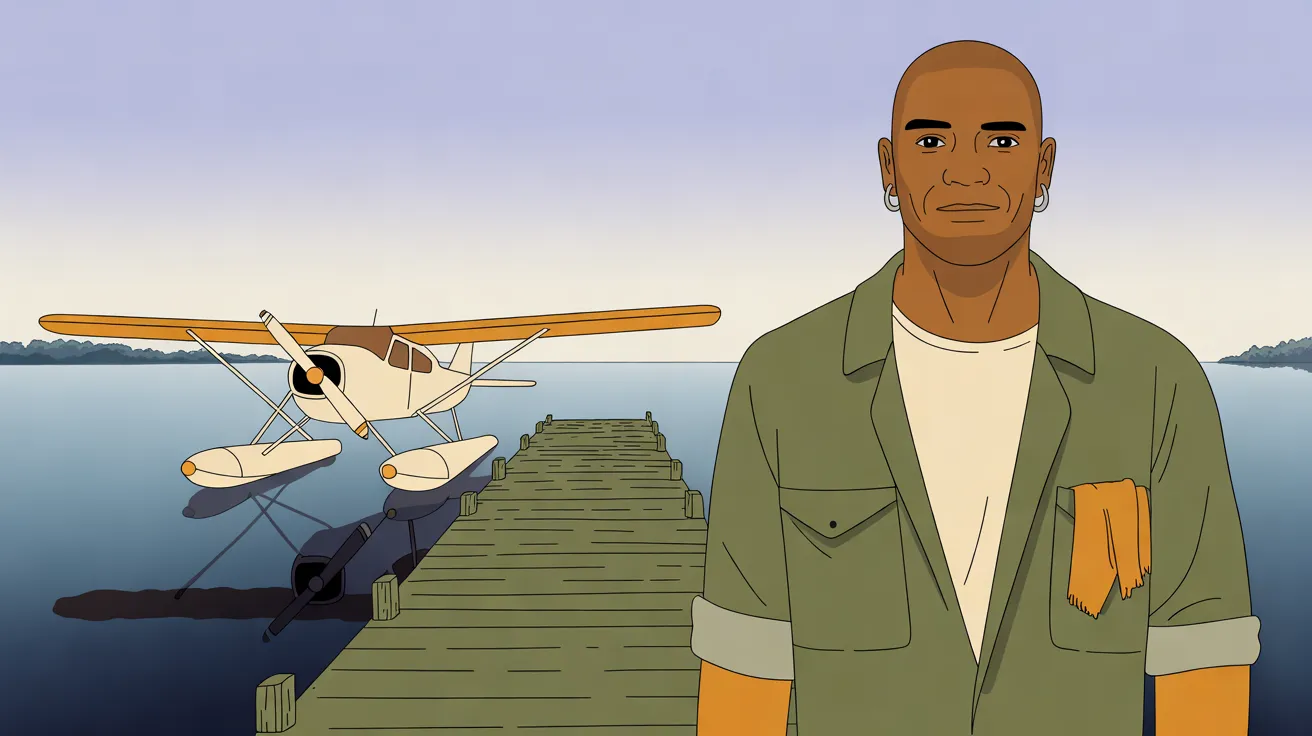
The Lagoon Mechanic, a lanky, clean-shaven man with deep brown skin, a shaved head and silver hoop earrings, stands at the right in a head-and-shoulders view, in olive-green coveralls with rolled sleeves over a cream T-shirt and an amber rag in his chest pocket. To the left, a cream float plane with an amber wing is moored beside a long wooden dock that runs out over a calm blue lagoon, its reflection dark on the water, under a pale lavender morning sky.
Ripples ring out across the still lagoon and rock the moored plane’s reflection.

If Papaya is your strain

You are on the dock before the plane is awake. Not because anyone asked, but because somebody has to know, and you would rather it was you. You like water you can see through, and plans you can see through too. You like mornings when everything is exactly where it is: the shadow sharp on the sand, the windsock hanging straight down, the day not yet decided.

You do things in order. Floats first, six compartments a side, a cup of the lagoon out of each; then the oil, the struts, the windscreen, the lines. Your hands know the toolbox the way other people know their own kitchen drawers, and you can find the right socket with your eyes on the sky. You hum while you work, the same three bars every morning, and you could not tell anyone what the song is.

At your best you make the conditions. On the stillest mornings, when the lagoon turns to glass and glass will not let a float go, you are the one who knows the trick: taxi a wide circle, then take off across your own ripples. The plane leaves on time. Nobody remembers the mechanic once it is up, and you prefer it that way; you were watching the shadow anyway.

Your flaw is that you never go. You have sent the plane off more mornings than anyone can count and have never once been in it when it lifted. Every pilot has held the door open for you at least once. You always say tomorrow, you always mean it kindly, and the door always closes. You tell yourself somebody has to stay on the dock and wave, which is true, and also not the whole reason.

What you need is a dock that reaches the deep water, a box where everything has its place, a lagoon clear enough to read the bottom, and somebody who brings the plane back by evening. Give you that, and the morning leaves on time.

Your sign at a glance

Your hour
Seven in the morning, before the first flight
Your place
The end of the long dock
Your object
An amber toolbox whose trays open like stairs
Your tempo
Rounds, in order
Your weather
Glass-calm and clear to the sand
Your flaw
You never go up

Your people

  • The Daydreamer (Blue Dream)The Daydreamer draws the coast from her bluff while you pump the floats below it. She has sketched your plane a hundred times and you have checked it a thousand; neither of you has ever been late.
  • The Sprinter (Green Crack)The Sprinter counts seconds; you count compartments. She races the plane down the dock most mornings, and you keep the score without being asked.
  • The Mountain Elder (Hindu Kush)The Mountain Elder reads contour lines and you read water. He says the fast way is rarely the way that gets there, and you say the same about leaving glass.

Things you say

  • On glass, make your own ripples.
  • Pump the floats before you trust them.
  • Every float takes on a little water overnight. Mornings are for getting it out.
  • If you can read her shadow on the sand, it is a good day to go.
  • Somebody has to stay on the dock and wave.

A scene from your world

Glass at seven

At seven the lagoon is glass. The Lagoon Mechanic walks the long dock with the amber toolbox in one hand, and the water is so still and so clear that the float plane at the end seems to hang a little above its own shadow, which lies on the white sand bottom as sharp as a drawing. The windsock on its pole hangs straight down. On the point behind the shed a papaya drops from its tree, and the sound carries all the way out.

He starts where he always starts, with the floats. Six compartments a side, each with a small round cap. He kneels, unscrews the first, fits the long brass pump and works it until it draws air: a cup of the lagoon comes out, clear as the rest, and goes back where it came from. Then the next, and the next. Every float takes on a little water overnight. Mornings are for getting it out.

Oil after that, the dipstick wiped on the rag from his back pocket and read against the light. Then the struts, the hinges of the water rudders, a thumb run along the edge of the propeller, and the windscreen wiped in long strokes until the sky in it is the same sky as the one above. He coils the lines on the dock in two neat rings. By the time the pilot comes down the planks with her bag, the toolbox is shut and he is sitting on it.

Glass, she says, and he nods, because there is no arguing with glass. Glass holds a float the way wet sand holds a boot: the smoother it is, the harder it pulls. She climbs in. The engine coughs once and catches, and the plane taxis out past the end of the dock, slow, drawing two clean lines across the lagoon.

Then she does what he taught her. She swings the plane into a wide circle, out toward the reef and back, and the wake goes out behind it in rings, ruffling the glass for the first time all morning. She lines up across her own ripples and opens the throttle. The floats climb onto the step; the hiss under them goes thin, then thinner; and somewhere above the white sand the plane and its shadow let go of each other.

He watches the shadow race across the bottom, over a ray, over the dark patch of sea grass, out to the reef, where it vanishes into the blue. The ripples arrive a minute later, knock along the dock and lift the toolbox lid a crack, and he presses it shut with one hand. The lagoon goes back to glass. On the way up the planks he picks up the fallen papaya, still green on one side and amber on the other, and sets it on the shelf in the shed, where it will be ripe by the time she is home.
The lagoon

The long dock
Weathered planks that run out until the water is deep enough for a float plane. They are worn pale down the middle by one pair of deck shoes, out and back, every morning.
The glass
What the lagoon becomes on still mornings: so clear and flat that the plane seems to hang above its own shadow. It is beautiful to look at and the hardest water there is to leave.
The floats
Twelve compartments, six a side, each with a small round cap. Each takes on a little water overnight, and each is pumped dry before anyone trusts it with the day.
The toolbox
Amber paint over old dents, with trays that open out like a staircase. Everything in it has a place, and the place is where it is.
The windsock
An amber cone on a pole at the end of the dock. When it hangs straight down, it is a glass morning, and the plane will have to make its own ripples.
The papaya trees
A row of them on the point behind the shed. The fruit ripens from green to amber on the same tree, the colors of the plane and the box, and nobody on the dock thinks that is a coincidence.

The Lagoon Mechanic, from every side

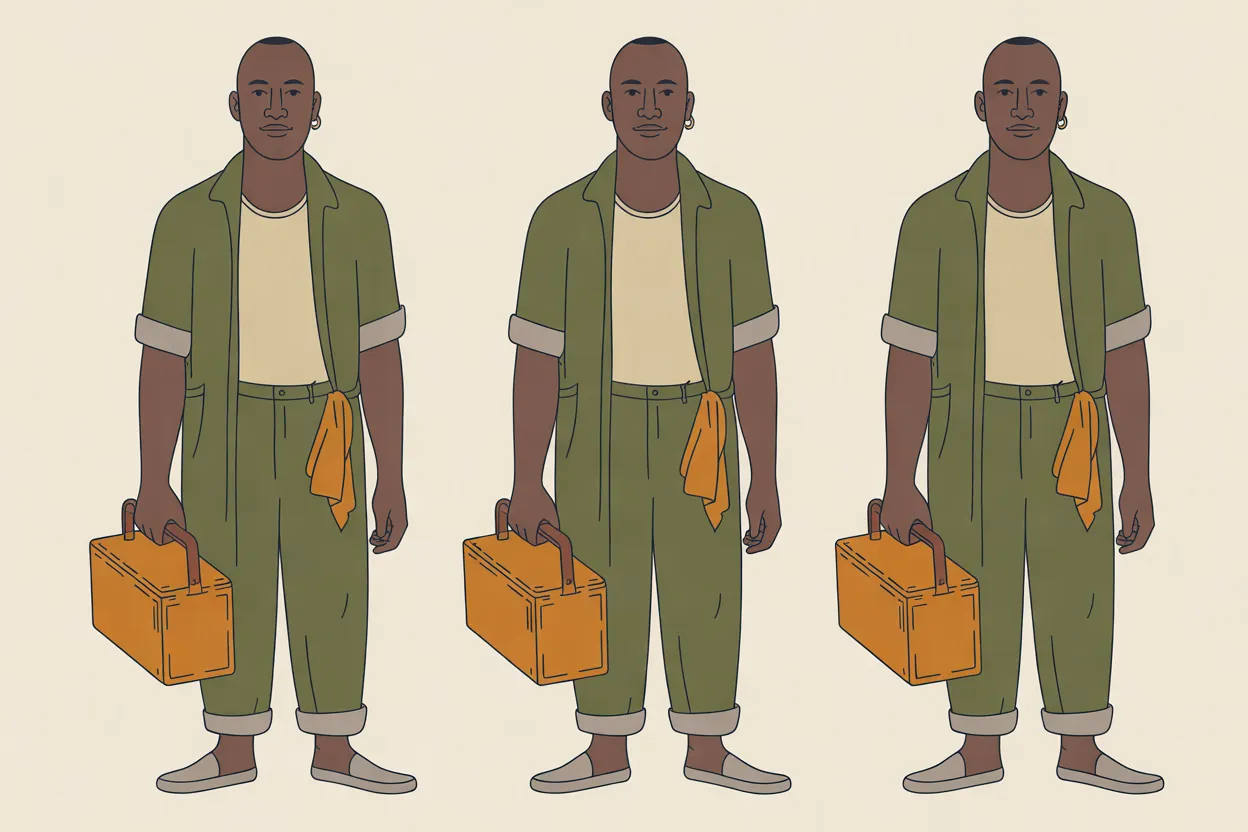
The Lagoon Mechanic character sheet on a warm cream background: three identical full-length front views with the same calm expression, each holding an amber toolbox in one hand. He wears olive-green coveralls open over a cream T-shirt with the sleeves and cuffs rolled, an amber rag tucked at the waist and grey slip-on shoes.
The Mechanic three times over, ready for the dock: coveralls open over a cream T-shirt, the rag at his waist and the amber box in hand.

An original character, created for Papaya by Official Cannabis. Art direction by Official Cannabis.

Wear the glass morning

Pieces from this world come on a tee, a hoodie, stickers, a mug and a print.